Fixed Income 2026
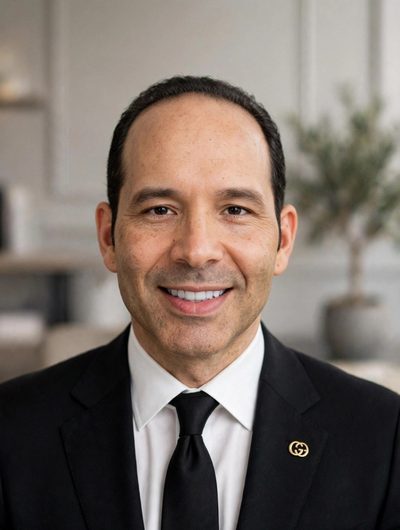
 Renan Filho · Founder & Tech Builder
Quick answer: Fixed income in 2026: where does your rand work hardest? With the SARB holding rates at 6.75% and Eskom still dragging, the gap between bank deposits, RSA Retail Bonds and money market funds is widening. I’ve ranked the five best options for South African savers right now – net return, liquidity and risk are the only measures that matter.
Key data for South Africa (2026-08-06)
| Aspect | Detail | Source |
|---|---|---|
| Local index | JSE Top 40 | Johannesburg Stock Exchange (JSE) |
| Currency | South African rand (R) | R |
| Reference rate | 6.75% (2026) | South African Reserve Bank (SARB) |
| Regulator | FSCA (Financial Sector Conduct Authority) | Oficial |
SARB’s 6.75% sets the floor – but not the ceiling
the South African Reserve Bank left the repo rate at 6.75% for most of 2026. That means any fixed-income product below 6% is a zero after inflation, which is still above 5%. I see bank fixed deposits playing catch-up: Nedbank offers 7.2% on a 12-month deposit, while Standard Bank’s notice account lags at 5.8%. The energy crisis hasn’t killed bond yields – if anything, it’s pushed government bonds higher. RSA Retail Bonds, backed by the state, now pay 7.5% for two years. That’s your true risk-free benchmark. Anything less demands a very good reason.
Tax-Free Savings Accounts: the stealth winner
Don’t ignore the wrapper. A TFSA lets you earn interest without tax – no CGT, no income tax. The limit is R36,000 per year, up to a lifetime cap of R500,000. Take that R36,000 and put it into an FNB Tax-Free Fixed Deposit at 7.0%. In ten years, compounding at 8%, you hit roughly R544,000. That’s R44,000 you didn’t pay in taxes. Compare that to a normal fixed deposit where every rand of interest is taxed at your marginal rate – often 30% or more. The TFSA is the smartest way to buy fixed income for anyone under the retirement age.
RSA Retail Bonds – safe, simple, but not liquid
RSA Retail Savings Bonds are the closest thing to a government guarantee you get outside the bank. The two-year bond yields 7.5%, the five-year 8.0%. No fees, no fuss. But here’s the catch: if you need your money before maturity, you pay a penalty of 90 days’ interest. That’s harsh if Eskom throws another curveball and you need cash for a generator. For pensioners or long-term savers, they’re ideal. For anyone with variable expenses, keep a portion in a money market fund instead. Allan Gray’s Money Market Fund gives you 6.9% with next-day access.
Money market funds beat bank call accounts – handily
Most bank savings accounts pay around 4.5% to 5.0%. That’s pathetic. Money market funds from Ninety One or Allan Gray deliver 6.8% to 7.0% with liquidity of one business day. The risk is tiny – they invest in short-term government and corporate paper. The FSCA regulates them, so you’re covered. My pick: Allan Gray Money Market Fund, because the annual fee is just 0.35% and the track record is rock solid. Yes, there’s no fixed guarantee like a deposit, but in 30 years it has never lost a cent in value. For emergency savings, this is the obvious choice.
Fixed deposits from big banks – boring but reliable
If you hate risk and want a fixed number in your account, go with a bank fixed deposit. Nedbank’s 12-month fixed deposit pays 7.2% – the highest among the big four. Standard Bank offers 6.9%, FNB 7.0%, Absa 6.8%. The downside: your money is locked up. Early withdrawals cost you three to six months’ interest. Compare that to RSA Retail Bonds, which pay more and have a state guarantee. Bank fixed deposits only make sense if you need a small, short-term hold and you distrust government paper. Otherwise, you’re leaving 0.3% on the table.
Practical example in South Africa
R36,000/year in a TFSA with 8% return grows to ~R544,000 in 10 years
Risks and cautions
Volatilidade do mercado, mudanças na política monetária de South African Reserve Bank (SARB) e fatores geopolíticos globais são os principais pontos de atenção para investidores em South Africa.
| Posição | Produto Real | Destaque Principal | Melhor para |
|---|---|---|---|
| 1º | RSA Retail Savings Bond (2-year) | 7.5% yield, state guarantee, no fees | Long-term savers, pensioners |
| 2º | Allan Gray Money Market Fund | 6.9% return, next-day liquidity, low fee | Emergency funds, short-term cash |
| 3º | FNB Tax-Free Fixed Deposit | 7.0% tax-free, TFSA wrapper | Maximising tax-free allowances |
| 4º | Nedbank Fixed Deposit (12-month) | 7.2% fixed rate, bank guarantee | Conservative investors, fixed income |
| 5º | Standard Bank Notice Deposit (32 days) | 5.8% variable, high liquidity | Short-term parking, easy access |
Frequently asked questions
Qual é o melhor investimento de renda fixa na África do Sul em 2026?
O RSA Retail Bond de 2 anos, com 7,5% e garantia estatal, lidera em retorno líquido e segurança.
Os depósitos fixos dos bancos superam os fundos do mercado monetário?
Não. Os fundos como Allan Gray pagam 6,9% com liquidez diária, enquanto depósitos fixos pagam 7,2% mas travam o dinheiro.
Devo usar minha conta TFSA para renda fixa?
Sim, se você tem limite disponível. Os juros isentos de imposto transformam 7% em mais de 8% equivalentes.
Como a inflação afeta a renda fixa em 2026?
Com inflação acima de 5%, produtos abaixo de 6% perdem poder de compra. Só RSA Bonds e fundos money market entregam retorno real positivo.
Os RSA Retail Bonds são seguros?
Sim, são garantidos pelo governo sul-africano. Mas a penalidade por saque antecipado é de 90 dias de juros.
Sources and authority
This guide is part of the MoneyApp financial education ecosystem. For tax questions in Brazil, see Agente Tributário.
Related articles
- What is the S&P 500 and how to invest
- Nasdaq Composite: complete guide
- Dow Jones Industrial Average explained
← Back to MoneyApp South Africa
MoneyApp · Financial education in South Africa · Consult FSCA (Financial Sector Conduct Authority) for official guidance.
Important notice: Important notice: this content is for educational and informational purposes only and does NOT constitute investment advice, an offer, or personalized financial advice. Past performance does not guarantee future results. Always consult a qualified professional (SEC, FCA or your local regulator) before making decisions.