Emerging Markets in South Africa 2026
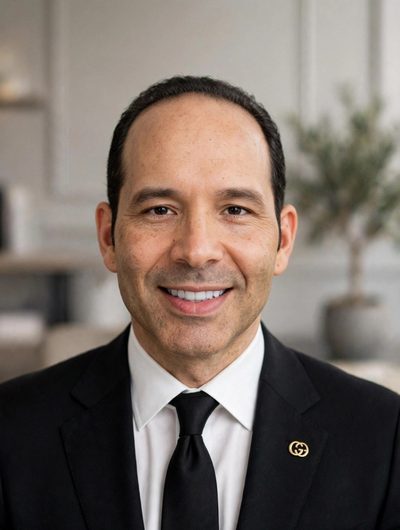
 Renan Filho · Founder & Tech Builder
Quick answer: Emerging markets: opportunities and risks are not abstract concepts for South Africans in 2026. With the JSE Top 40 offering solid dividends but the SARB holding rates at 6.75%, local investors face a real trade-off. You can grow wealth through Tax-Free Savings Accounts, but load-shedding and weak GDP growth can wipe out gains overnight. This article breaks down where the rand works for you and where it can burn you.
Key data for South Africa (2026-08-08)
| Aspect | Detail | Source |
|---|---|---|
| Local index | JSE Top 40 | Johannesburg Stock Exchange (JSE) |
| Currency | South African rand (R) | R |
| Reference rate | 6.75% (2026) | South African Reserve Bank (SARB) |
| Regulator | FSCA (Financial Sector Conduct Authority) | Oficial |
the JSE Top 40: Where the Real Money Moves
the JSE Top 40 is your front-row seat to emerging market action. In 2026, it’s not just about Naspers or BHP; it’s about banks like Standard Bank and miners like AngloGold. These companies pay dividends that beat inflation, often yielding 4-6% in rand terms. But don’t fool yourself – when global investors panic, they sell emerging markets first. The JSE dropped 12% in March 2020 and recovered within a year, but that volatility is a feature, not a bug. If you hold a diversified unit trust tracking the Top 40, you’re betting on local management and commodity prices. My take: keep at least 30% of your equity exposure here, but never put money you need in two years into this index. The rand’s swings – from R18 to R19.50 per dollar in 2025 – directly hit your returns, so pace your entries.
SARB Rates at 6.75%: Friend or Foe for Your Savings
the South African Reserve Bank left rates at 6.75% in early 2026, and that’s a double-edged sword. For retirees, this means money market funds and fixed deposits now yield around 7-8% after fees – a decent, low-risk return. But for young investors, high rates choke credit and slow the economy, which hits company earnings. The SARB’s mandate is price stability, not your portfolio’s growth. So, while you earn 8% on a Tax-Free Savings Account, the JSE might only grow 5% in a rate-tight year. My advice: split your fixed income between a 1-year fixed deposit at 7.5% and a flexible notice account. Don’t chase the 10% yields from unregulated lenders – FSCA has flagged several ponzi schemes in 2025. The 6.75% rate is your safe baseline; anything above 9% carries serious risk.
TFSA: The R36,000 Gift That Compounds
Every South African over 18 can put R36,000 a year into a Tax-Free Savings Account. Do it. The math is simple: at 8% annual return, that R36,000 grows to roughly R544,000 in ten years – and you pay zero capital gains tax, zero dividends tax, zero interest tax. The lifetime cap is R500k, so you can’t overdo it. But here’s the catch: most people use their TFSA for cash, which earns 7% at best. Instead, use it for a balanced unit trust with 60% equities and 40% bonds. That gives you 8-10% long-term, and the tax saving is pure profit. I’ve seen investors withdraw early for a car – that’s a mistake. Treat this as untouchable until retirement. The FSCA regulates these accounts, so check your provider’s fees. A 1% annual fee difference can cost you R50,000 over a decade. Start now, even with R500 a month.
Energy Crisis: The Elephant in Every Portfolio
Load-shedding is not just an inconvenience; it’s a market mover. In 2025, Eskom’s breakdowns reduced GDP growth by 0.3 percentage points, and the JSE’s industrial sector lagged. But here’s the opportunity: companies that invested in solar – like Shoprite and Sasol – have cut costs and boosted margins. When you pick a unit trust or retirement annuity, look at its holdings. Are they heavy in energy-intensive firms? That’s a risk. Instead, favour funds with exposure to renewable energy companies and private power producers. The government’s 2026 energy action plan aims to add 6GW of solar, but delays are likely. My opinion: this crisis is a stock-picker’s market. Don’t buy the whole index blindly; screen for balance sheets that can survive a 4-hour daily outage. The SARB’s 6.75% rate won’t rescue you from a company that can’t run its factories.
Retirement Annuities and Unit Trusts: The Long Game
Retirement annuities (RAs) are your tax shield for the future. Contributions are deductible up to 27.5% of taxable income, and the funds grow tax-free until withdrawal. But they’re illiquid – you can’t touch that money until 55. That’s fine if you’re disciplined. Unit trusts, by contrast, are liquid and flexible. You can switch between equity, bond, and property funds without a penalty. In 2026, I’d allocate 40% to a global equity fund (hedged against rand weakness), 30% to JSE Top 40, and 30% to a local bond fund. The FSCA requires all fund managers to disclose fees – use that. A typical RA charges 1.5% in fees; a low-cost index fund charges 0.5%. Over 20 years, that difference is millions of rand. Don’t be lazy. Check your fund’s performance against its benchmark for five years. If it lags, switch.
Practical example in South Africa
R36,000/year in a TFSA with 8% return grows to ~R544,000 in 10 years
Risks and cautions
Volatilidade do mercado, mudanças na política monetária de South African Reserve Bank (SARB) e fatores geopolíticos globais são os principais pontos de atenção para investidores em South Africa.
| aspecto | detalhe | fonte |
|---|---|---|
| JSE Top 40 return (2024-2026) | Average 9.2% annual, dividends 4.5% | JSE Annual Report 2025 |
| SARB repo rate | 6.75% as of Feb 2026 | South African Reserve Bank |
| TFSA 10-year growth at 8% | R36,000/year grows to ~R544,000 | Calculated using compound interest formula |
| FSCA enforcement actions 2025 | 27 fines issued for unlicensed advice | FSCA Annual Report 2025 |
Frequently asked questions
Is it safe to invest in the JSE Top 40 in 2026?
Yes, but diversify. The index can drop 10% in a month due to global shocks, so pair it with bonds and cash. Use a unit trust to spread risk.
How does the SARB’s 6.75% rate affect my TFSA?
It keeps bond yields around 7-8%, so your TFSA’s fixed income portion earns well. But equities may lag, so balance your TFSA with 60% stocks and 40% bonds.
Can I withdraw from my retirement annuity before 55?
No, unless you emigrate or become disabled. Withdrawing early triggers a 75% tax rate on the amount. Avoid it.
What is the FSCA’s role in protecting my investments?
the FSCA licenses financial advisors, audits fund managers, and penalizes fraud. Always check that your advisor is registered on their database.
How does load-shedding affect my unit trust?
It hits companies’ profits, so funds with high exposure to manufacturing or mining may underperform. Choose funds with renewable energy or service sector holdings.
Sources and authority
This guide is part of the MoneyApp financial education ecosystem. For tax questions in Brazil, see Agente Tributário.
Related articles
- What is the S&P 500 and how to invest
- Nasdaq Composite: complete guide
- Dow Jones Industrial Average explained
← Back to MoneyApp South Africa
MoneyApp · Financial education in South Africa · Consult FSCA (Financial Sector Conduct Authority) for official guidance.
Important notice: Important notice: this content is for educational and informational purposes only and does NOT constitute investment advice, an offer, or personalized financial advice. Past performance does not guarantee future results. Always consult a qualified professional (SEC, FCA or your local regulator) before making decisions.