Stocks Vs Real Estate Funds (FIIs) in South Africa 2026
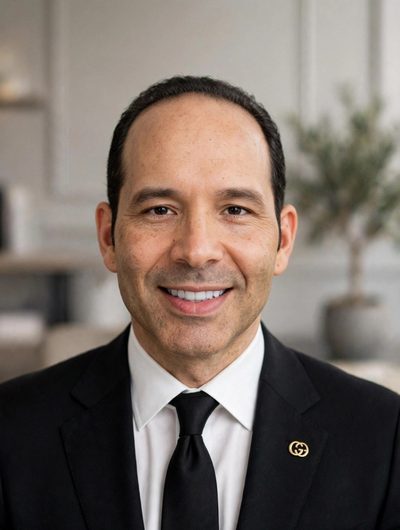
 Renan Filho · Founder & Tech Builder
Quick answer: Stocks versus real estate funds (FIIs) in South Africa is a fight between growth and income. JSE Top 40 shares offer capital appreciation, while local property funds deliver monthly cash. Your choice depends on whether you need R500 monthly dividends or R50,000 in capital gains over a decade. Both are valid, but they serve different masters.
Key data for South Africa (2026-08-13)
| Aspect | Detail | Source |
|---|---|---|
| Local index | JSE Top 40 | Johannesburg Stock Exchange (JSE) |
| Currency | South African rand (R) | R |
| Reference rate | 6.75% (2026) | South African Reserve Bank (SARB) |
| Regulator | FSCA (Financial Sector Conduct Authority) | Oficial |
The JSE Top 40 Reality Check
The JSE Top 40 has been a stubborn beast. Between load-shedding and SARB's 6.75% repo rate, heavyweight stocks like Naspers and BHP have seen wild swings. But here's the thing: over 10 years, a diversified JSE portfolio has historically returned around 9-10% before fees. You get real ownership in companies that can raise prices during inflation. The catch? You must stomach 15-20% drawdowns without panicking. Your R36,000 yearly TFSA contribution into a JSE Top 40 unit trust buys you volatility, not certainty. If you cannot watch your balance drop R40,000 in a bad quarter, shares will break your nerves.
FIIs: The Cash Machine with a Ceiling
Real estate funds on the JSE, like Growthpoint or Equites, pay out most of their rental income as dividends. In 2026, average yields sit between 8-11%, which beats the 6.75% SARB rate hands down. You get monthly or quarterly cash, which is perfect for retirees or anyone topping up a retirement annuity. But property funds face a brutal enemy: the electricity crisis. Retail centres and offices lose tenants when businesses fail. Vacancy rates in Sandton office blocks hit 12% in 2025. Your capital growth is capped because property values track inflation, not innovation. You are buying a rental cheque, not a growth engine.
Tax: The Silent Deal Breaker
Here is where most South Africans get fooled. Your TFSA allows R36,000 per year, with no CGT on gains up to R500k lifetime. If you invest that into an FII, your dividends get taxed as income at your marginal rate (up to 45%). But if you hold JSE shares in a TFSA, you avoid CGT on the sale and dividend tax is still payable. The math favours growth stocks in a TFSA, and income funds in a discretionary account. For retirement annuities, FIIs make sense because the fund pays no tax internally. But for a taxable unit trust, the 20% dividend withholding tax on FIIs eats your yield. Use the right wrapper for the right asset.
The 2026 Energy Crisis Twist
You cannot ignore Eskom. Load-shedding stages 4-6 directly hit property funds because tenants demand backup power or leave. JSE-listed industrial REITs have spent millions on solar, which squeezes near-term distributions. Meanwhile, energy-linked stocks like Sasol or renewable firms in the Top 40 could rally hard if the grid stabilises. SARB's 6.75% rate is still restrictive, which pressures property valuations. My view: FIIs are a tactical income play for the next 24 months, not a strategic hold. Shares in resilient sectors like banks and healthcare will outperform property over 5 years. But if you need R15,000 monthly income now, you take the property dividend and accept the risk.
Practical Allocation for Your Rand
Stop chasing 'the best' and build a split. If you are under 40, put 70% in a JSE Top 40 ETF inside your TFSA. The remaining 30% goes into a diversified FII like the Sygnia Itrix SA Property ETF in a discretionary account. For those over 55, flip it: 60% FIIs for income, 40% shares for inflation protection. Use your R36,000 TFSA allowance every year without fail. At 8% return, that grows to R544,000 in a decade — tax-free. That is R544,000 the FSCA will not touch. Do not overcomplicate this. The biggest risk is doing nothing while inflation eats your cash.
Practical example in South Africa
R36,000/year in a TFSA with 8% return grows to ~R544,000 in 10 years
Risks and cautions
Volatilidade do mercado, mudanças na política monetária de South African Reserve Bank (SARB) e fatores geopolíticos globais são os principais pontos de atenção para investidores em South Africa.
| aspecto | detalhe | fonte |
|---|---|---|
| JSE Top 40 10-year return | ~9-10% annualised before fees | JSE historical data |
| Average FII yield 2026 | 8-11% dividend yield | JSE listed REIT reports |
| TFSA contribution limit | R36,000 per year, no CGT up to R500k lifetime | FSCA / SARS |
| SARB repo rate 2026 | 6.75% | South African Reserve Bank |
Frequently asked questions
Can I hold FIIs inside a TFSA?
Yes, but the dividends are taxed as income, which wastes the tax-free benefit. Better to hold growth shares there.
Which has higher risk in 2026: JSE shares or FIIs?
Shares have higher volatility, but FIIs face structural risks from load-shedding and high vacancy rates.
Do I need to pay CGT on TFSA gains?
No, up to R500k lifetime gains are exempt. After that, standard CGT rates apply.
What if I need monthly income now?
FIIs are better for cash flow. But diversify across retail, industrial, and office funds to lower tenant risk.
Is the JSE Top 40 enough for diversification?
No, it is heavy on resources and banks. Add a small cap or offshore fund to balance your portfolio.
Sources and authority
This guide is part of the MoneyApp financial education ecosystem. For tax questions in Brazil, see Agente Tributário.
Related articles
- What is the S&P 500 and how to invest
- Nasdaq Composite: complete guide
- Dow Jones Industrial Average explained
← Back to MoneyApp South Africa
MoneyApp · Financial education in South Africa · Consult FSCA (Financial Sector Conduct Authority) for official guidance.
Important notice: Important notice: this content is for educational and informational purposes only and does NOT constitute investment advice, an offer, or personalized financial advice. Past performance does not guarantee future results. Always consult a qualified professional (SEC, FCA or your local regulator) before making decisions.